
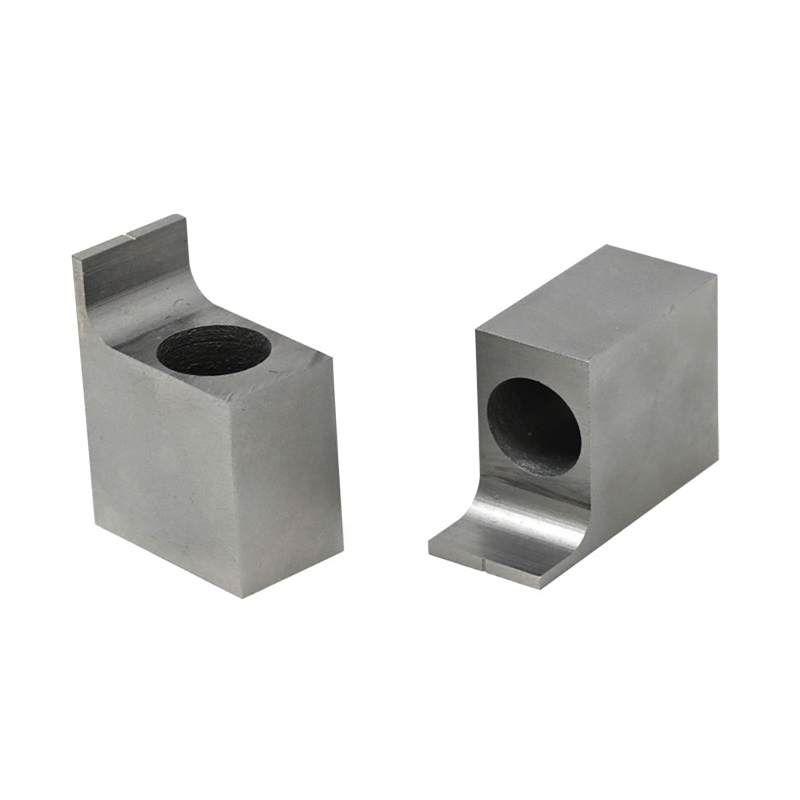
Die Sinking EDM
The die sinking EDM process uses a die in the negative shape of the desired cut as the electrode. This die is brought in contact or ‘sunk’ into the workpiece in the presence of a dielectric fluid. This creates a negative impression of the die in the workpiece through a series of electrical discharges between the electrode and the workpiece.
Imagine pressing a metallic object into clay. The clay assumes the negative shape of the metallic object. The die sinking EDM process works the same way.
Description
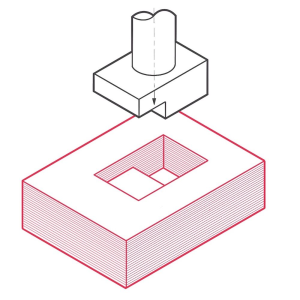
When people talk about electrical discharge machining, this is the process that is generally referred to. It is the conventional EDM process also known as cavity-type, volume, ram or sinker EDM.
In cavity-type EDM, the selection of the electrode material depends on the electrical conductivity and erosion resistance of a material. The higher they both are, the better. As a result, these electrodes are generally made of graphite or copper. Graphite is, however, easier to machine. The cost involved in machining the electrode can prove costly unless a higher volume of production can justify it.
With this method, manufacturers can create complex features (such as sharp internal corners) that are not possible via CNC machining services.
When to use EDM
Some applications for electro-discharge machining may include:
- Micro-hole drilling
- Cutting sharp internal corners
- Creating injection moulding tools
- Cutting extrusions
- Cutting rotary forms
- Drilling curved holes
- Engraving on hard materials
- Removing broken tools from workpieces
Reviews
There are no reviews yet.