This article delves into the diverse world of CNC machines and their practical applications.
CNC (Computer Numerical Control) machines operate on pre-programmed instructions, generated through CAD (Computer-Aided Design) software. After designing, the CAD model is transformed into g-code, a CNC-readable format that provides operational instructions to the CNC machine, incorporating numerical values and coordinates.
CNC machines boast remarkable versatility, existing in multiple forms, and find application across a myriad of tasks.
Here’s a comprehensive overview of various types of CNC machines.
Types of CNC Machines
- Milling Machine
- Lathes
- CNC Routers
- Pick and Place Machines
- Laser and Plasma Cutters
- Custom-Built Machines
- 3D Printers
Exploring Diverse CNC Machines and Their Applications:
Milling Machine:
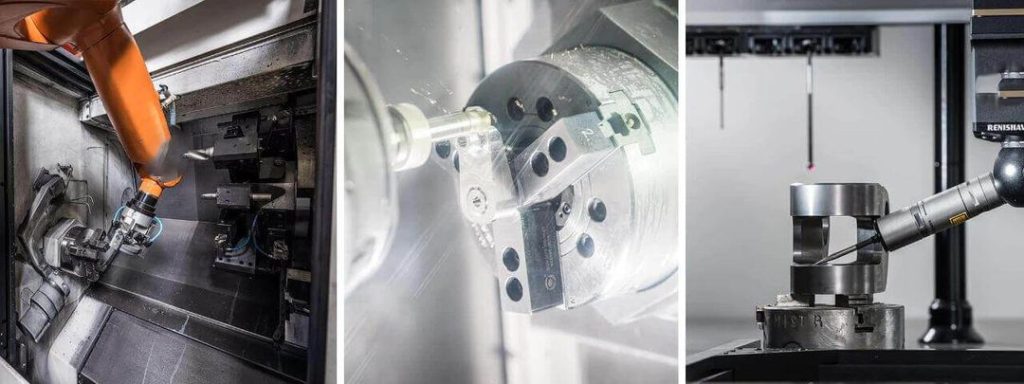
Widely embraced in CNC machining, milling machines excel at cutting or drilling solid materials. Equipped with rotary tools, they navigate multiple axes, enabling precision in various directions and depths, often featuring a 3-6 axis configuration.
Lathes:
Functioning similarly to milling machines, lathes shape materials through spinning contact. The key distinction lies in the rapid rotation of the material while the tool sculpts it. Lathes are ideal for crafting conical, cylindrical, or spherical shapes.
CNC Routers:
Primarily employed for expansive 2D projects, CNC routers cut materials like aluminum, steel, wood, or plastic. Programmed along the X, Y, and Z axes, these routers adhere to the Cartesian coordinate system. While 3D routers cater to intricate work, 2D routers are more prevalent.
Pick and Place Machines:
Designed to relocate electrical components, these machines utilize nozzles and a vacuum system to precisely move components along pre-programmed coordinates. Widely used for circuit boards in electronic devices such as laptops and smartphones.
Laser and Plasma Cutters:
These machines share the goal of precise cutting but differ in methodology. Laser and plasma cutters leverage beams to achieve accurate designs, with lasers suitable for intricate work and plasma cutters for thicker sheet metals, using gas or optical light, respectively.
Custom-Built Machines:
Many CNC machines have undergone retrofitting to incorporate modern technology, updating parts to match current capabilities. Custom-built machines are crafted with the latest technology to address specific project requirements.
3D Printers:
Although somewhat unconventional, 3D printers fall under the CNC umbrella. Programmed via G-code, these printers use additive manufacturing, building designs layer by layer, setting them apart from subtractive manufacturing machines.
Industries leveraging CNC machining encompass medical, aerospace, automotive, electrical manufacturing, and general engineering.
Discover a spectrum of CNC services at YS, including CNC machining and 3D printing. Connect with our team to discuss your needs and receive a customized quote.