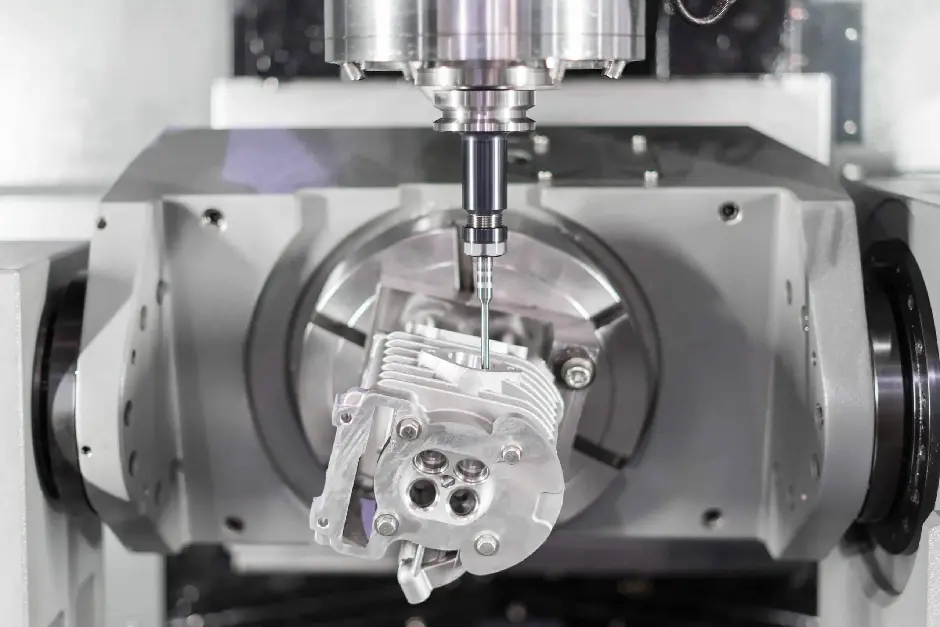
What is 5-Axis CNC Machining?
5-axis CNC machining is an exceptionally versatile subtractive machining process that utilizes cutting-edge technology. This method involves cutting a workpiece into its final shape using cutting tools that operate on five axes, offering precision and efficiency. Widely favored for its high accuracy and repeatability, CNC machining relies on Computer-Aided Design (CAD) files to program tool paths managed by Computer Numerical Control (CNC). The entire process can be automated, minimizing the need for manual intervention.
This article explores the distinctive features of 5-axis CNC machining, setting it apart from its 3-axis and 2-axis counterparts, and underscores the advantages of employing a 5-axis CNC machine.
With an increased number of axes, 5-axis milling machines boast enhanced capabilities compared to their three and two-axis counterparts. These machines can be configured to operate with minimal supervision, providing efficiency and allowing for a single set-up for manufacturing various parts. This efficiency and versatility make 5-axis CNC machining a preferred choice across industries.
How does a 5-axis CNC machine work?
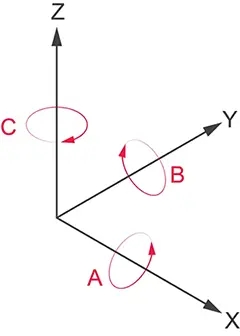
5-Axis CNC Machining, also known as multi-axis machining, is an extremely versatile process that enhances the capabilities of CNC milling or CNC turning machines by introducing two additional degrees of freedom. These extra degrees of freedom stem from the ability to rotate the workpiece, the tool head, or both, in addition to the three linear axes of movement. This introduces the A, B, and C axes, which rotate around the X, Y, and Z axes, respectively.
The increased degrees of freedom offer improved tool accessibility, allowing for the machining of more complex geometries. Additionally, it facilitates single-setup machining, often referred to as ‘Done-in-One,’ which enhances efficiency by reducing machining time.
There are three primary types of multi-axis CNC machines: 5-axis indexed CNC milling, 5-axis continuous CNC milling, and 5-axis milling/turning machining centers.
What is 5-axis indexed CNC milling?
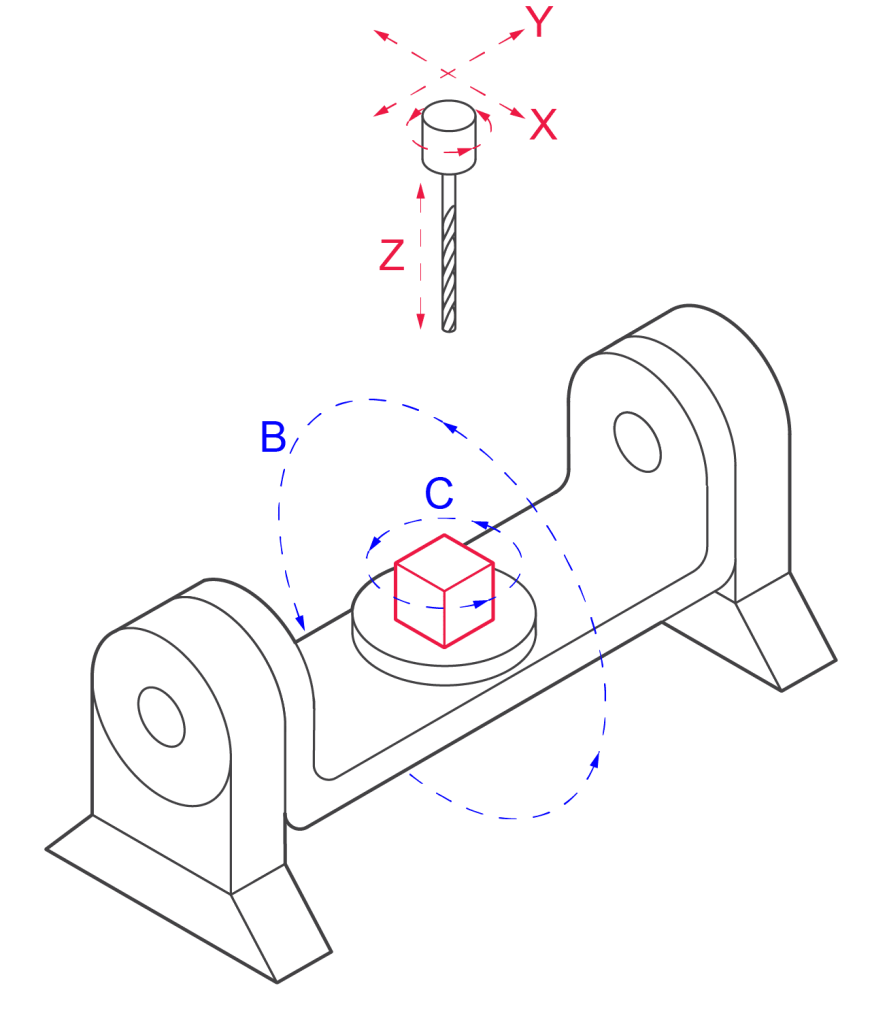
5-axis indexed milling, also known as 3 + 2 machining, operates by rotating the workpiece around the B and C axes to the required position. The workpiece remains stationary while the tool executes the desired cuts, moving along its three linear axes. When changing the cutting location, the B and C axes reorient the workpiece and then remain stationary for that cutting location. This machining method is referred to as 3+2 CNC milling because the additional two degrees of freedom do not operate simultaneously with the three linear axes of the tool.
The primary advantage of this method is the elimination of the need to manually reposition the workpiece. This reduction in manufacturing time increases the accuracy of parts with complex geometries compared to using 3-axis milling.
✅ Eliminates the need to manually reposition the workpiece
✅ Reduced manufacturing time compared to 3-axis CNC machining
❌ Cannot cleanly machine contoured faces
❌ Increased cost compared to 3-axis CNC machining
What is 5-axis continuous CNC milling?
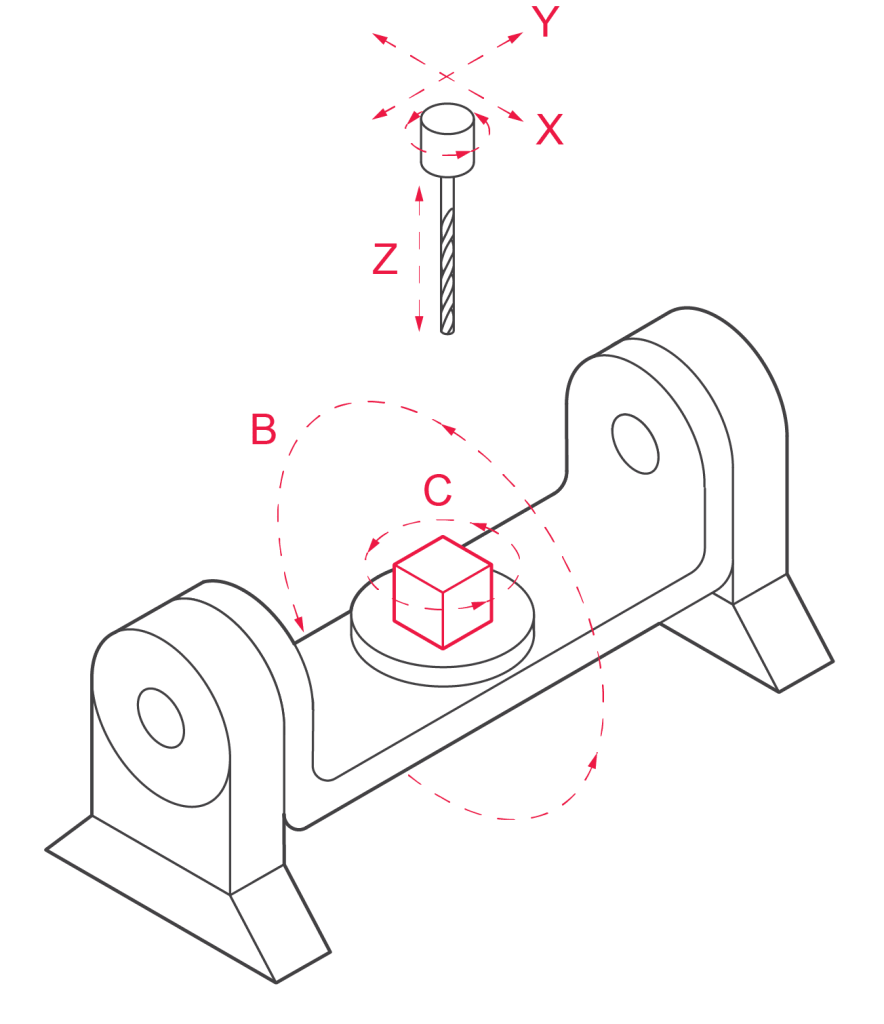
5-axis continuous CNC milling machines share similarities with 5-axis indexed CNC milling machines. However, in continuous 5-axis machining, the workpiece can rotate continuously around the B and C axes during machining operations.
In this method, both the workpiece and cutting tool can move along five different axes simultaneously, allowing the machining of complex features. It is particularly effective for producing smooth contoured surfaces, such as those found on turbine blades, with very high accuracy. This approach is prevalent in the aerospace industry, but the combination of expensive machinery and the need for highly skilled machinists significantly increases the cost of this method.
✅ Ability to machine complex features and smooth surfaces in a single setup
✅ Produce complex parts to an accuracy that is not achievable with any other process
❌ Most expensive CNC machining method
❌ Certain tool restrictions still apply