
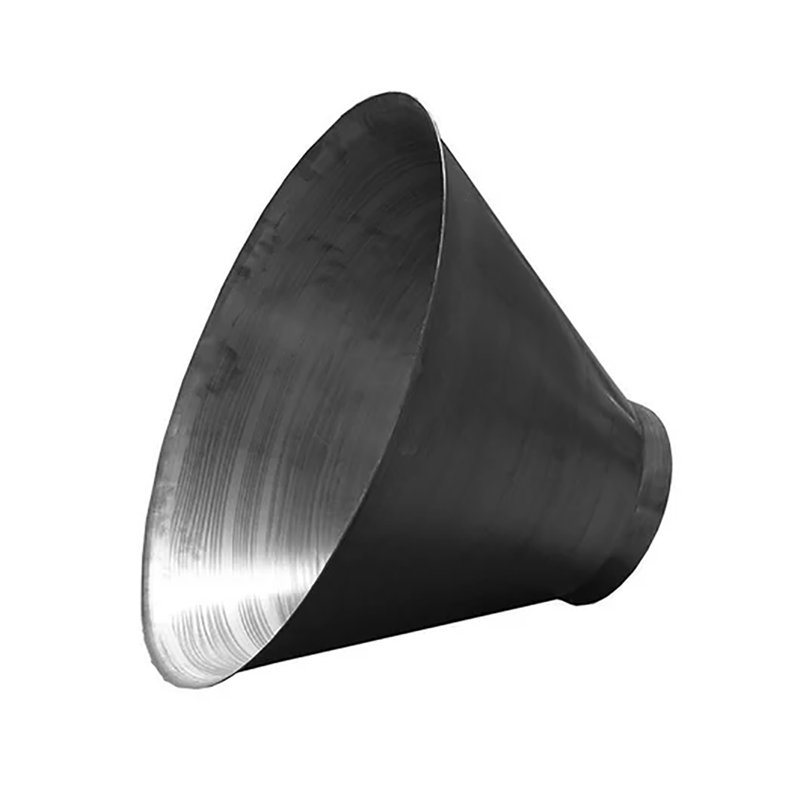
CNC metal spinning
Explore the efficiency and precision of CNC metal spinning with our specialized PNC technology. Transform raw metal rounds into large, bespoke creations with unparalleled accuracy and craftsmanship.
Description
- Metal spinning is a metalworking process that involves the application of force by a roller in order for the workpiece, which is spinning at high speeds, to conform to the contour of the mandrel. Metal spinning transforms a flat or preformed metal sheet into an axially symmetrical figure.
- A lathe machine is adapted for the metal spinning process. The components of a metal spinning lathe are the mandrel, roller, tailstock, headstock, spindle, and follower.
- Conventional metal spinning increases the depth of the workpiece while maintaining its material thickness constant.
- In shear spinning, the material thickness of the workpiece is reduced while maintaining its diameter constant. The depth of the workpiece also increases.
- Hot spinning is used for materials that are difficult to deform at room temperature. It is used when the material has low ductility and malleability.
- Multiple pass spinning is used when producing parts with sharp and complex designs. It also ensures uniform thickness.
- Tube spinning is a form of shear spinning, which elongates hollow, cylindrical tubes.
- Ideal materials for the metal spinning process are metals that can be deformed on a mandrel and lathe or can be metal stamped. Metals commonly formed by metal spinning are aluminum, steel, brass, bronze, Hastelloy, and titanium.
- Metal spinning specializes in creating hemispheres, cones, cylinders, parabolas, and venturis. It is an ideal fabrication process for constructing tank heads.
- Spun parts are seamless; this makes them durable. Metal spinning also improves the mechanical properties of the metal by refining its grain structure.
Reviews
There are no reviews yet.