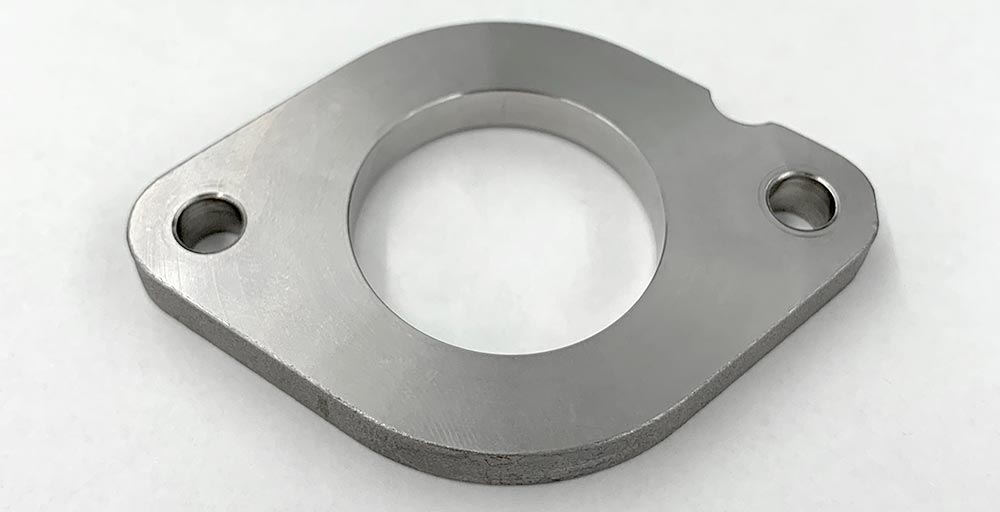
Custom Laser Cutting services for OEM
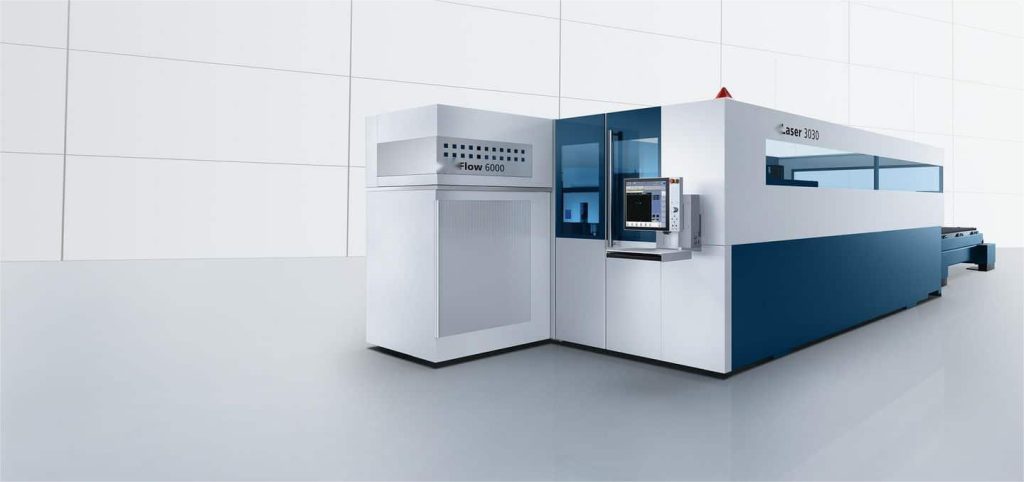
Laser Cutting Process
AmTech offers a laser cutting service, a precise metal fabricating process where a high-intensity laser beam cuts metals, such as stainless steel, into customized shapes. This process boasts high accuracy with tolerances within 0.005”, and impressive speeds of up to 2,000 inches per minute or one meter per second.
Two main types of lasers are employed in metal fabrication based on the active laser medium: gas-state lasers and solid-state lasers. The widely used CO2 laser, a gas-state laser, directs the laser beam through a glass tube containing a mixture of carbon dioxide, nitrogen, hydrogen, and helium. Solid-state lasers, including crystal or fiber lasers, use crystals or optical fibers doped with rare-earth elements like erbium, ytterbium, neodymium, or dysprosium. Notable solid-state lasers include neodymium-doped yttrium aluminum garnet (Nd:YAG) and neodymium-doped yttrium orthovanadate (Nd:YVO4).
Manufacturing Capabilities
- Equipment: TRUMPF Laser Cutting Machinery
- Max Dimensions: 3′ x 3′ x 0.65″
- Cutting Accuracy: ±0.003″
Most Common Laser Types
CO2 lasers excel with non-metallic materials (glass, plastic, wood, mild steel) and materials that mustn’t oxidize during cutting. They offer smaller burrs, better edge quality in thicker materials, and faster cutting of straight lines.
Fiber and crystal lasers, more potent than CO2 lasers, are ideal for hard metals and ceramics. They have lower maintenance costs, higher energy efficiency, and can cut reflective materials like copper, brass, and aluminum without fear of back reflections damaging the laser machine.
Advantages of Laser Cutting Services
- Efficient with high travel speeds and deep penetration.
- Creates accurate shapes, clean edges, minimal kerf, and minimal material contamination for thicknesses less than ⅝”.
- Quick setup without hard tooling, no tool changeover costs, and easy program revisions.
- Generates less scrap due to close cuts and employs techniques like nesting, lead-ins, lead-outs, and tabbing to reduce waste.
Disadvantages of Laser Cutting
- High power consumption compared to other metal cutting methods.
- Heat generated in the process can oxidize or burn certain materials, and plastic emits toxic gas when cut.
- Inconsistent production rate, dependent on the laser cutter type, material, and thickness.
Laser cutting has evolved since the 1964 invention of the CO2 laser cutter, with advancements in solid-state fiber and disk lasers gradually replacing traditional sheet metal processing systems. Like any technology, laser cutting has its pros and cons.
Summary

AmTech possesses versatile supplier capabilities capable of handling a diverse range of materials with a focus on high quality and precise tolerances. Our team of highly skilled and experienced engineers is ready to guide you through the entire production process, from concept to actual production. We offer expert advice on the most cost-efficient manufacturing processes tailored to your specific quality requirements and target price.