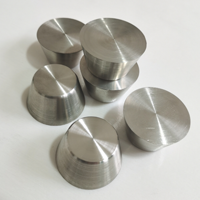
The global aerospace industry, valued at over $800 billion, is characterized by continuous innovation, particularly in manufacturing practices and technologies. Aerospace CNC machining has emerged as a crucial component of this industry, driven by the industry’s emphasis on safety and the need for precision in manufacturing aircraft components.
In the aerospace sector, safety is paramount, and every aircraft component must meet the highest industry standards. Precision and accuracy are non-negotiable in the production and assembly of aircraft, where even the smallest flaw can have severe consequences. Aerospace CNC machining addresses these requirements, offering the high level of precision needed for both metal and plastic parts.
Aerospace CNC machining involves the production of parts used in the assembly and maintenance of aircraft and space shuttles. Aerospace CNC machining companies produce kits, components, and assemblies that are integral to aerospace crafts. The materials used in aerospace CNC machining, such as Titanium and Kovar, are selected for their high quality and ability to ensure proper functionality and safety. Other materials include aluminum, stainless steel, copper, bronze, and certain types of plastics.
Precision machining is of utmost importance in the aerospace industry due to its stringent safety controls and high production standards. CNC machining provides the necessary accuracy to meet these standards and ensure the reliability and safety of aerospace components.

In the aerospace industry, precision is paramount, and every part must adhere to the tightest dimensions, tolerances, and performance standards. This stringent requirement is essential to ensure the reliability and safety of aircraft and space stations. The aerospace industry faces substantial financial and safety risks with even a single faulty component, emphasizing the critical nature of precision and high standards in manufacturing.
Aerospace machining companies, including qualified services like RapidDirect, utilize state-of-the-art CNC machining equipment to produce aerospace prototypes and end-use components. Working with aerospace-grade metals and plastics, CNC machining systems can achieve tolerances as low as 0.002 mm, meeting the industry’s exacting standards. Advanced post-processing and inspection systems further ensure that finished aerospace prototypes and parts meet the required specifications.
The applications of aerospace CNC machining are diverse, covering the production of millions of components in an aircraft. Various manufacturing processes, including sheet metal fabrication, injection molding, and advanced techniques like CNC machining and 3D printing, are employed to create these components. Each process is tailored to meet the specific requirements of different parts within the aerospace industry.
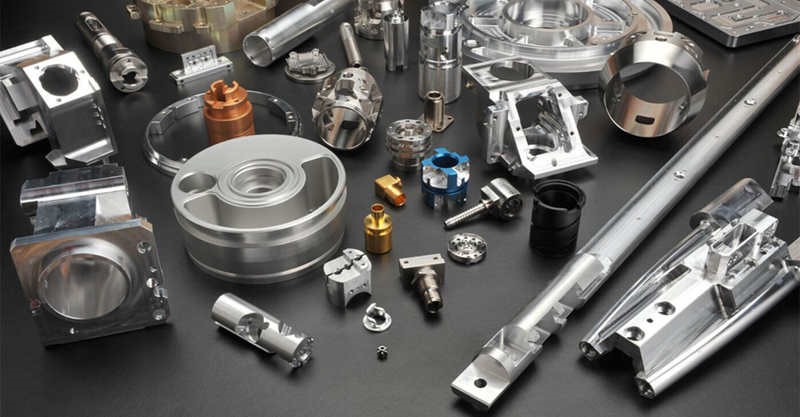
In the aerospace industry, complexity is an asset, particularly when using 5-axis machining for the production of complex aircraft components. This machining process allows for the simultaneous milling, drilling, and manipulation of parts along multiple axes, including X, Y, Z, and linear axes. The ability to create parts with partially hollowed-out or complex geometries contributes to reducing weight without compromising quality or performance—a critical factor in the aerospace sector.
Aerospace CNC machining companies leverage sophisticated design, workflow software, and advanced inspection processes to produce end-use parts and high-quality tooling components for aerospace manufacturers. Numerous CNC machining aerospace parts are manufactured, including hydraulic manifolds, transmissions, fuel bodies, landing gear, electrical connectors, housings, and more. CNC machining also plays a crucial role in aerospace research and development, enabling rapid iteration of new component designs, testing, and editing when necessary.
In aviation, whether for cargo planes, fighter jets, or passenger airlines, precision is crucial throughout the aircraft’s production. CNC machining is instrumental in creating seemingly insignificant yet vital parts for aircraft engines, navigational systems, wings, and more, ensuring safe and efficient flight.
In space travel, companies like NASA and SpaceX rely on aerospace CNC machining to manufacture technologically advanced spacecraft and rockets. Precision manufacturing is essential to withstand the challenges of space and ensure the safe operation of spacecraft, protecting both the crew and the spacecraft itself.
YS offers aerospace CNC machining capabilities, meeting the industry’s stringent standards. Their engineers are equipped to handle various tolerances for CNC machining aerospace parts, providing high precision and reliability for customers.
When faced with aerospace machining challenges that other CNC machining companies may deem impossible, RapidDirect welcomes your inquiry. Our team is prepared to collaborate with you on every aspect to ensure that the final product meets your distinctive requirements. Simply upload your design file today, and our technology-driven platform will promptly generate quotes for your consideration.
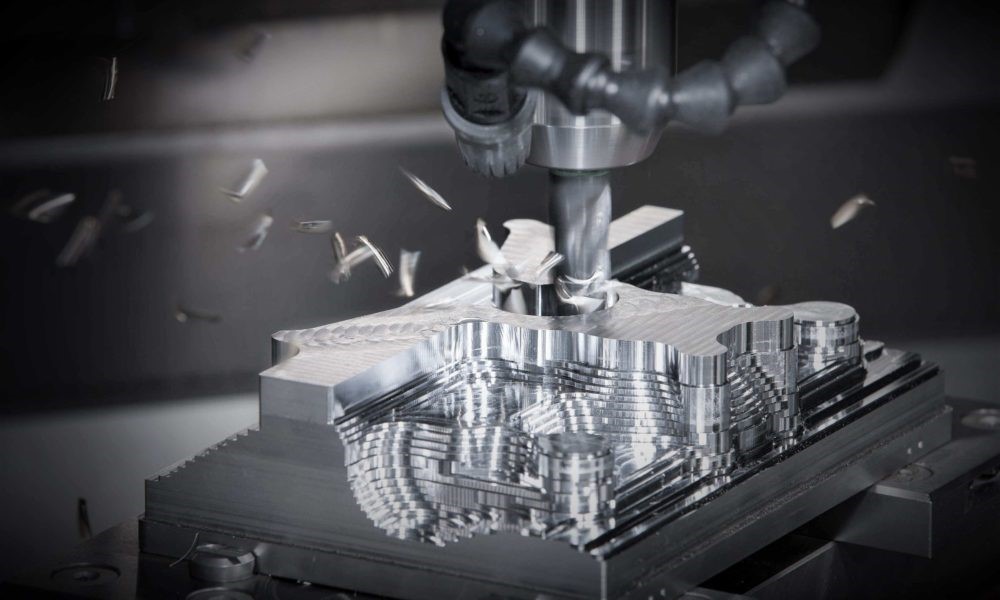
Aerospace parts manufactured through CNC machining are intricate and diverse, warranting the utilization of 5-axis milling machines. Employing 5-axis CNC machining entails the precise control of a machine through CNC technology, enabling the simultaneous movement of cutting tools and parts along up to 5 axes.
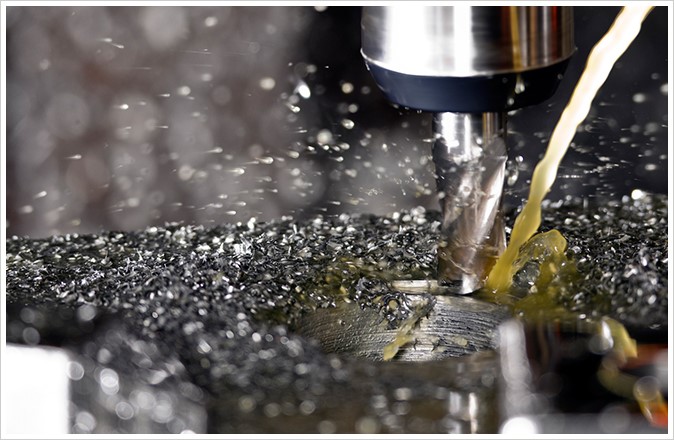
The configuration of the machine allows for intricate geometries. As the aerospace industry continually advances, the ongoing reconfiguration and adaptation of parts are achievable with 5-axis CNC machining. This robust process is well-equipped to handle the technical intricacies and scope of aerospace components. Consequently, engineers can mill, drill, or manufacture these components to meet the specific specifications of the aircraft. Additionally, 5-axis machines adhere to the high-performance standards required for aerospace CNC machining.
While it’s typical to associate aerospace manufacturing with components like an aircraft’s engine or wings, it’s essential to recognize that an aircraft comprises millions of parts. For instance, the Boeing 747 alone consists of over 6 million components. Clearly, not all of these parts are manufactured using CNC machining.
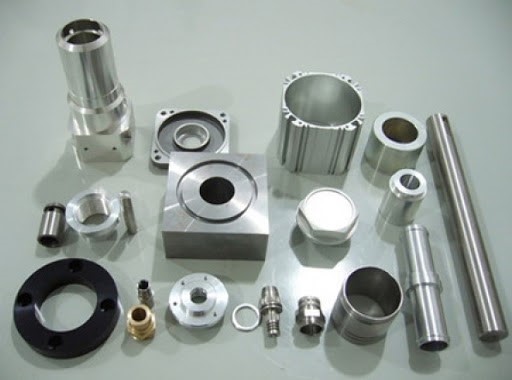
In aircraft assembly, the selection of materials for CNC machining is crucial, considering two key properties: strength and weight. Heavy metals like steel, while strong, are not ideal due to their weight, impacting fuel efficiency. The aerospace industry focuses on strong and lightweight metals such as titanium and aluminum alloys for CNC machining. Titanium, about 30% stronger and 50% lighter than steel, is resistant to high temperatures and corrosion, making it suitable for functional components and external parts. Aluminum, lighter than titanium but less strong, is cost-effective and well-suited for various aircraft components.
High-performance plastics play a vital role in manufacturing interior components. These lightweight materials, including PEEK and other aerospace-grade polymers, are used for parts such as interior wall panels, ventilation ducts, aircraft doors, and bearings. Aerospace CNC machining ensures the production of strong, lightweight, and complex plastic parts, offering the high precision needed for polymer-based aerospace applications.
The aerospace industry, renowned for its high-quality requirements and industry standards, relies on aerospace CNC machining to produce crucial components. Emphasizing safety and risk management, YS stands ready to meet the stringent manufacturing needs of the aerospace industry.
Let’s Start A New Project Today